




Contents
Share



Most product launch events underdeliver, not because the new product is weak, but because the event itself is treated as a logistics exercise rather than a strategic activation. The venue gets booked, invitations go out, a run sheet gets written the night before, and the day unfolds reactively rather than deliberately. What’s left behind is a room full of people who attended but didn’t convert, and a team that worked hard to produce an outcome that the planning never set up properly.
A product launch event is a high-stakes execution moment where preparation, coordination, and environment all determine whether the event builds commercial momentum or simply marks a date on the calendar. This guide covers every phase of that planning, from pre-event strategy through to post-event follow-up, with the physical venue and workspace environment as a running thread throughout.
What Makes a Product Launch Event Different from Other Business Events
A product launch event has its own planning logic, and conflating it with a conference or networking event is where most teams go wrong early. Unlike other business events, a product launch has a single measurable outcome: generating market awareness, buyer intent, and commercial momentum around a specific release. Everything else, including the format, the guest list, the room, and the agenda, serves that outcome or it doesn’t.
The complexity is that a product launch event must serve several stakeholders simultaneously. Media and press need a compelling narrative and quotable moments. Prospective customers need enough product depth to form a genuine opinion. Existing clients need to feel recognised and informed before the market does. Partners need context for how the product affects their relationship with you. Internal teams need to leave the room energised and aligned. Designing one event that serves all of these groups without diluting the experience for any of them requires deliberate choices, not defaults.
The format and environment must be chosen to serve the outcome, not selected out of convenience or familiarity. A launch held in the wrong space, at the wrong scale, for the wrong audience mix, can actively undermine the product story it’s supposed to tell.
Building Your Product Launch Event Plan
Before a single invitation goes out or a venue is shortlisted, the strategic decisions made in this phase determine whether the event is set up to succeed. Logistics can be corrected late. Strategy cannot.
Define the Event Objective and Success Metrics
The first planning decision is the objective. What does a successful event actually produce, and how will that be measured in the days and weeks that follow?
Common objectives for a product launch event include:
- Media coverage and press pickups
- Qualified pipeline generated from attendee conversations
- Partner sign-ons or distribution agreements
- Social media reach and content amplification
- Customer education that shortens the sales cycle
Each of these implies a different event design. A pipeline objective drives toward smaller, higher-quality audience selection and more time for one-on-one conversation. A media coverage objective drives toward a tighter narrative, a more controlled environment, and a press-specific briefing format. Your objective determines everything downstream in your strategy: format, audience size, venue type, content agenda, and the follow-up sequence that converts the event into commercial outcomes.
Know Your Audience and Format
The audience segmentation decision is one of the most consequential choices in product launch event planning, and one of the most commonly skipped. A launch event aimed at press and analysts runs differently from one aimed at prospective buyers, and differently again from one designed for existing customers. Trying to serve all three in a single format usually means designing compromises that serve none of them well.
The primary format options each carry different implications:
- Intimate roundtables work for high-value prospects where the quality of the conversation and the depth of the product discussion matter more than scale.
- Larger showcase events work for broad awareness plays where the experience of the room is part of the brand message.
- Closed briefings for press and analysts require a controlled environment, a tight narrative, and sequenced access to spokespeople.
- Hybrid formats extend reach to distributed audiences but require broadcast-quality AV and reliable connectivity to avoid the event feeling two-tier.
Format determines the physical space required, and that connection runs in both directions. A roundtable needs a boardroom. A showcase needs a flexible, well-equipped event space for hire. A hybrid event needs infrastructure that most improvised venues cannot provide reliably.
Set Your Timeline and Pre-Event Milestones
Work backwards from event day.
- Six weeks out, the venue should be confirmed, the audience list finalised, and the core narrative locked.
- Four weeks out, invitations should be sent, speaker briefings underway, and AV and catering requirements submitted to the venue.
- Two weeks out, registrations should be tracking against target, run-of-show documentation drafted, and any product demonstration logistics confirmed.
- In the final week, every element is rehearsed, every handoff is confirmed, and the escalation path for day-of issues is documented and communicated to the team.
The cross-functional dependencies that most teams underestimate are the ones that compress badly when left late. Product readiness confirmation, legal sign-off on messaging, spokesperson preparation, AV testing, and catering logistics all have their own lead times. When they collide in the final week, the quality of execution suffers.
The venue booking decision belongs early in this timeline, not late. The right space in a CBD location books out, and securing it early removes a planning variable that can otherwise destabilise everything else.
Looking for a workspace solution?
Choosing the Right Venue for a Product Launch Event

Venue choice is a strategic decision, not an administrative one. The environment communicates something about the product and the brand before a single word is spoken. A poorly chosen space undercuts the narrative the event is trying to build. The right space reinforces it.
For a product launch event specifically, the criteria that matter are:
- Location accessibility for the target attendees
- AV and connectivity capability that doesn’t require the organiser to bring their own equipment
- Layout flexibility to accommodate the planned format
- Privacy for sensitive product reveals
- The impression the space creates on arrival
For Australian-based events, the CBD advantage is worth factoring in directly. Sydney and Melbourne’s central business districts are well-connected by public transport across rail, tram, and bus networks, making attendance straightforward for metropolitan audiences without the parking and access friction that out-of-CBD venues introduce.
Beyond logistics, a CBD address carries its own credibility signal. For press, senior buyers, and partners who attend events regularly, the location communicates that the organiser has taken the event seriously. That signal is registered before anyone enters the room.
Meeting Rooms for Intimate Launch Formats
For press briefings, analyst roundtables, investor previews, and VIP customer sessions, the format priority shifts from scale to quality. The room needs to feel deliberate, the AV needs to perform reliably, and the setup needs to communicate that the people in it were chosen rather than herded. These are high-value conversations where the environment either supports depth or distracts from it, and getting this right is as much a part of the launch strategy as the narrative itself.
A well-equipped meeting room or boardroom is the right choice for these formats. The intimacy signals that the audience has been selected. The professional setup signals that the conversation will be substantive. The absence of background noise, poor acoustics, or unreliable connectivity signals that the organiser has thought carefully about the experience of being in the room.
JustCo’s boardrooms and conference rooms for hire across Melbourne and Sydney’s CBD are equipped for presentations and video conferencing and available without a long-term commitment. For teams running multiple briefing sessions around a launch, the ability to book what’s needed, when it’s needed, removes a layer of venue complexity from an already demanding planning schedule.
Event Spaces for Larger Launch Activations
Showcase events, partner briefings, customer unveilings, and any format where the experience of the room is part of the product story require a different environment entirely. At this scale, the space needs to do more than accommodate people. It needs to support the narrative arc of the event, from arrival through presentation to networking and demonstration.
What a good event space needs to deliver for a product launch is specific:
- Layout flexibility to separate presentation, networking, and demonstration zones
- Reliable high-speed connectivity for live product demonstrations and hybrid broadcast
- AV infrastructure already in place rather than requiring the organiser to source and install it
- A professional environment that holds up to scrutiny from press, partners, and senior buyers who attend events regularly and notice when a venue has been settled for rather than chosen
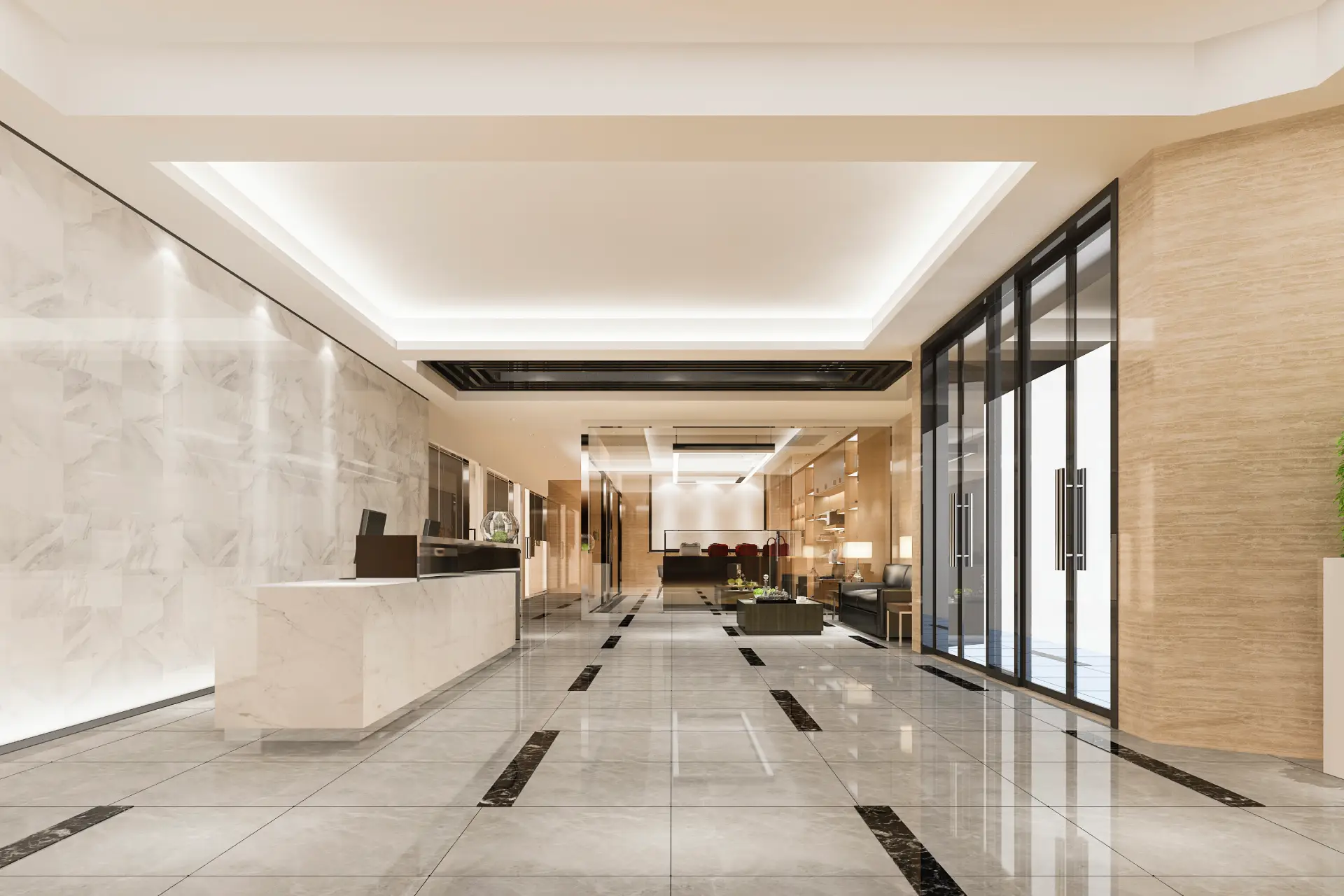
JustCo’s event space for hire across Sydney and Melbourne’s CBD are professionally equipped and suited to product activations, partner events, and launch day programming. Bookable on demand, they scale to the event rather than requiring the organiser to commit to more than the activation needs.
Running the Event: What to Have in Place on Launch Day
By launch day, the planning work should be finished. What remains is execution, and the margin for improvisation is narrow. AV and connectivity checks need to happen before the first attendee arrives. The run-of-show document should be in every key team member’s hands, with timings, speaker cues, and handoffs mapped explicitly. Speaker briefings should have happened at least 24 hours earlier, with a final confirmation the morning of the event.
A product launch event involves product, marketing, sales, and often PR all operating simultaneously in the same space. Each function needs to know exactly what it owns on the day and who the escalation point is when something falls outside their lane. Ambiguity in coordination is how avoidable problems become visible ones in front of the wrong people.
The attendee experience from arrival to exit is the product in the room. The first impression at reception sets the tone. The flow through the event agenda determines whether energy builds or dissipates. The demonstration or product interaction moments are where intent forms. The close, whether a direct conversation, a next-step offer, or a follow-up commitment, is where the event’s commercial purpose is realised. Each of these moments needs to be designed.
Following Up After the Launch Event
The event isn’t the finish line. The follow-up sequence is where the momentum built in the room converts, or doesn’t, into commercial outcomes. Most of that conversion window is open for 48 to 72 hours after the event. Beyond that, attention disperses and the urgency created on the day fades.
Personalised follow-up to attendees should go out within 24 to 48 hours. Any materials or recordings promised during the event should be delivered in that same window. Every conversation and commitment logged on the day should be in the CRM before the follow-up sequence begins, so the sales team is working from a complete picture rather than memory and business cards.
The broader post-event review is where the planning team extracts the intelligence that makes the next activation sharper. Attendance data, engagement signals during the event, and pipeline activity in the days that follow all tell a story about what worked and what the format got wrong. That story is worth capturing while it is fresh.
The content opportunity is also worth planning for in advance rather than improvising afterwards. A well-executed product launch event generates press coverage, social content, testimonial material, and the foundations of case studies. The assets that extend the event’s reach well beyond the room are produced in the event itself. Capturing them requires someone in the room with that job.
Plan Your Next Product Launch Event with JustCo
Every phase of planning covered in this guide is made easier when the venue question is already resolved. A confirmed space removes one of the most consequential dependencies in the planning timeline, and for CBD-based events in Sydney and Melbourne, it’s the dependency that books out first.
JustCo’s meeting rooms and event spaces across Sydney and Melbourne are the practical answer to the venue question for businesses planning product launch events at either scale. Bookable boardrooms and meeting suites for intimate, high-value formats. Fully equipped event spaces for larger activations where the environment is part of the product story. CBD addresses that make the event easy for the right people to attend. The flexibility advantage is straightforward: JustCo spaces are bookable on demand, so the venue commitment scales with the event rather than the other way around.
The JustCo app makes event-day logistics easier for the organising team as well. Meeting rooms and event spaces can be booked and managed directly through the app, details confirmed on the go, and last-minute adjustments made without going through a manual booking process when the day is already moving fast.
Explore JustCo’s meeting rooms and event spaces across Sydney and Melbourne, enquire about availability for your next product launch, or speak to the team about what your event needs.


 3 min